What should drive the choice?
Shortlist the Eaton when demand above 1,000W or a documented external-battery plan requires it. Keep the APC when its exact capacity and six outputs are sufficient and its management configuration fits.
Research based on manufacturer documentation. We have not physically tested this equipment.

Check the exact equipment
Amazon.com model searches can include alternatives. Confirm the full model, electrical configuration, seller, condition, included hardware and warranty.
The 1500-class name hides the largest difference
A buyer comparing SMT1500RM2UC with 5PX1500RTG2 should write watts beside the model names before looking at optional features. The APC carries a 1,000W rated ceiling. The Eaton carries a 1,440W rated ceiling. Both have a 1,440VA rating in the cited US configuration. They therefore occupy a similar family-name category while supporting meaningfully different real-power plans. The distinction can eliminate the APC immediately for a load that exceeds its rating, regardless of how attractive its seller offer appears.
These are line-interactive units, not a choice between line-interactive and online double conversion. If the equipment requirement specifies continuous online conversion, neither wins by virtue of the model numbers used here. This article interprets the linked manufacturer records. It contains no physical runtime, transfer-time, fan-noise or management test. Its purpose is to expose buying gates that a short retailer comparison can overlook.
Use a load scenario that exposes the capacity boundary
Consider an illustrative planned 1,100W load at 120V, with the corresponding apparent-power requirement separately established by the project. The APC fails the watt gate because 1,100W is above 1,000W. The Eaton has 340W between that value and its stated 1,440W ceiling. That difference is not a recommended spare allowance and does not establish acceptable input current, battery duration or future capacity. It only shows why a common family label is an inadequate selection rule.
At an illustrative 700W demand both models can remain in the electrical shortlist, subject to VA and the other installation checks. The decision then becomes more about the shutdown window, configuration, outlet count and ownership requirements. If growth could bring the load beyond 1,440W, choosing the larger of these two still fails to solve the documented future case. Record ordinary load, accepted peak conditions and required failure scenarios as separate rows rather than allowing the smallest observed idle reading to represent the whole design.
| Buying field | APC SMT1500RM2UC | Eaton 5PX1500RTG2 |
|---|---|---|
| Rated output | 1,440VA / 1,000W | 1,440VA / 1,440W |
| Topology | Line-interactive | Line-interactive |
| Outputs | Six 5-15R | Eight 5-15R |
| Source connector | 5-15P | 5-15P |
Expansion is a system decision, not spare wattage
Eaton documents support for up to four 5PXEBM48RTG2 extended battery modules on this 5PX model. That is a specific approved battery ecosystem. It does not mean four generic 48V enclosures, nor does it raise the UPS output rating. The quote should identify the exact number of modules, support hardware, interconnections and rack space required for the desired runtime. A bare UPS listing and a complete expanded system are different purchases.
Use the APC exact-model runtime resources for the SMT and the Eaton resources for the 5PX at the same actual watts. Adding batteries changes the available stored-energy configuration, while increasing the supported watt ceiling concerns conversion capacity. Keep those ideas separate. If the requirement is simply to allow an application to shut down, a modest correctly validated system can be preferable to purchasing expansion without a defined service timeline. If the requirement is a longer bridge interval, obtain the published reference for the full proposed configuration before approving it.
Eight outputs help only when their arrangement fits
The Eaton has two more direct 5-15R receptacles than the APC. This can matter in a small rack where a separate distribution strip would occupy another rack position. It can matter less when a managed PDU already provides the required outlet map. Count supply cords and review access to every rear connection, including bulky plugs. A socket that exists on paper may be difficult to use beside cable management or a rear door.
Both cited models use 5-15P inputs, but matching the plug shape is only the beginning of supply approval. The source owner still needs to confirm voltage, permitted connection, available capacity and the other loads sharing the supply. Do not infer that a UPS’s maximum output wattage equals a universally permitted sustained demand from any convenient receptacle. Likewise, a PDU connected downstream retains its own limits. The larger UPS does not silently upgrade cords, receptacles or branch infrastructure elsewhere in the path.
Compare complete installation dimensions
Eaton lists a 17.6-inch body for the 5PX1500RTG2. The APC data reviewed here lists approximately 477mm. Evaluate those figures along with rail adjustment, plugs and service clearance, not as a bare contest for the smaller number. An expanded 5PX installation also needs space and structural support for the battery modules. A cabinet that accepts the UPS alone can become unsuitable after the proposed battery configuration is added.
Ask the supplier to itemize included mounting hardware and any ship-in-rack or special deployment accessory being proposed. Factory product descriptions and seller bundles are not always identical. Plan how the unit and any battery modules will be delivered, installed and serviced using the approved handling arrangement. We have not weighed a shipment or inspected rail fit, so the actual installation review belongs with the rack owner and current manufacturer instructions. Keep the accepted drawing with the bill of materials.
Define what management must accomplish
The APC provides SmartConnect with additional local communication and SmartSlot choices. Eaton lists the Network-M3 as optional on the 5PX1500RTG2. Compare the complete management package rather than a generic network-ready checkbox. Cloud status, local protocol integration, host shutdown and environmental inputs are separate jobs. A card that supports a compatible UPS does not by itself prove support for the project’s hypervisor, application workflow or authentication requirements.
Write down the hosts that need to receive a power event and the switches or management servers that carry that event. Include licensing, support and ongoing ownership where the selected software requires them. If an existing operations team maintains a documented platform successfully, its familiarity can be useful. That is an organizational reason for a choice, not evidence of superior hardware reliability. Obtain current compatibility and firmware references before standardizing the configuration.
Make the shortlist conditional on the complete requirement
Choose the 5PX1500RTG2 when its higher watt capacity, eight outputs or specific battery expansion path resolves a requirement the APC cannot meet. Keep the SMT1500RM2UC in contention when the load fits its 1,000W ceiling and the intended management and runtime configuration are sufficient. Neither recommendation depends on an invented price difference or a tested endurance result.
Before ordering, confirm the exact US model, rated VA and watts, approved source, common-load runtime reference, complete supports, optional cards and seller coverage. Amazon links here are exact-model searches rather than guarantees of stock or configuration. Inspect the full listing and verify every substituted suffix against the original requirement. The useful result of this comparison is a smaller, defensible shortlist, with unresolved questions written down rather than hidden behind a broad best-product label.
Compare relevant models on Amazon
Amazon.com model searches can include alternatives. Confirm the full model, electrical configuration, seller, condition, included hardware and warranty.
Sources and research basis
- Schneider Electric SMT1500RM2UC specificationsPrimary documentation · checked 15 October 2026
- APC exact-model datasheet (2022 edition; confirm current warranty terms)Primary documentation · checked 15 October 2026
- APC Smart-UPS product and runtime resourcesPrimary documentation · checked 15 October 2026
- Schneider Electric cartridge compatibility and firmware FAQPrimary documentation · checked 15 October 2026
- APC APCRBC159 replacement cartridge specificationsPrimary documentation · checked 15 October 2026
- Eaton 5PX1500RTG2 exact US product specificationsPrimary documentation · checked 15 October 2026
- Eaton 5PX G2 North American technical specificationsPrimary documentation · checked 15 October 2026
- Eaton 5PX G2 advanced user guidePrimary documentation · checked 15 October 2026
- Eaton exact 5PX1500RTG2 runtime graphPrimary documentation · checked 15 October 2026
- Eaton 5PXEBM48RTG2 compatible module specificationsPrimary documentation · checked 15 October 2026
- Eaton EBP-1613 battery compatibilityPrimary documentation · checked 15 October 2026
Thumbnail image credits
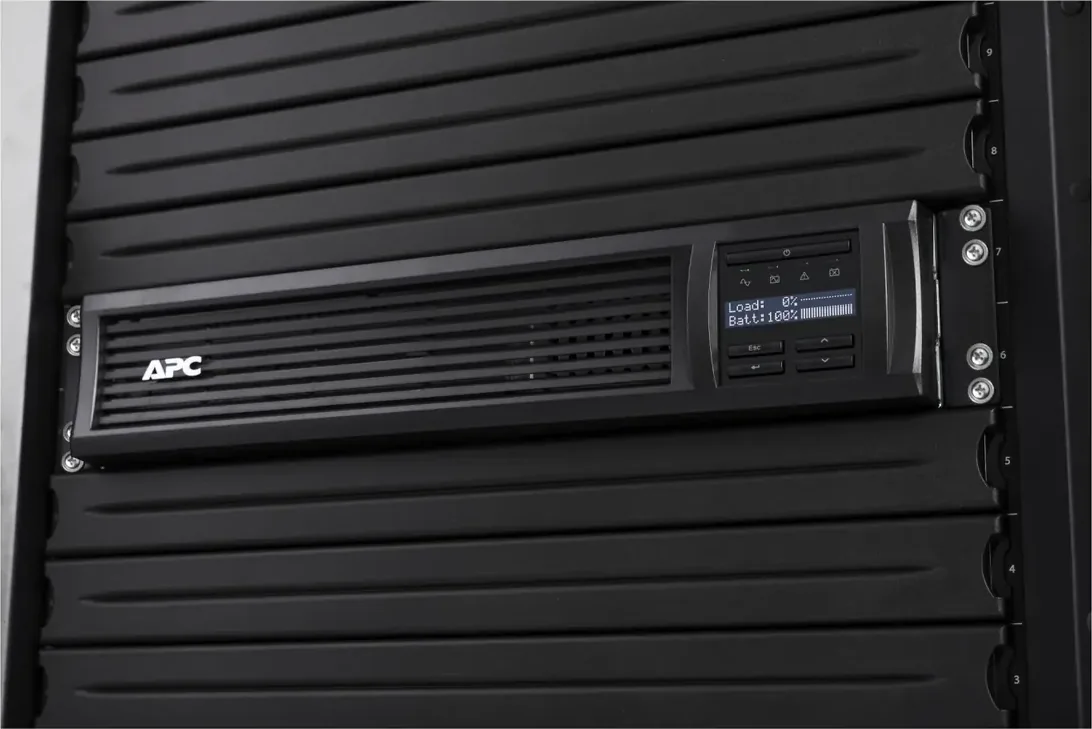
- Product photograph: Schneider Electric / APC: APC SMT1500RM2UC manufacturer product photograph
- Product image: Eaton: Eaton 5PX1500RTG2 manufacturer product image
Recommendations interpret the linked documentation. We have not physically tested this equipment and claim no original runtime, acoustics, switching or efficiency results. Report a correction.