What should drive the choice?
Specify the load, permitted power behavior and complete installation before naming an acceptable model. Reject substitutions that leave an essential field unanswered.
Research based on manufacturer documentation. We have not physically tested this equipment.
Check the exact equipment
Amazon.com model searches can include alternatives. Confirm the full model, electrical configuration, seller, condition, included hardware and warranty.
Begin with the service that must survive
A rack UPS procurement specification should explain what the organization is buying the battery time to accomplish. Keeping a firewall reachable through brief interruptions, shutting down a storage server, and sustaining an occupied branch office are different outcomes. Write the required outcome in an opening paragraph, identify the supported equipment, and name the person who approves success. A supplier can then challenge a missing assumption before it becomes an unsuitable purchase.
Describe the boundary of the project. State whether the quote includes installation, removal of the existing UPS, configuration, shutdown software, commissioning and disposal coordination. A hardware-only quotation can be valid, but it must not be compared with a proposal containing those services as if both deliver the same outcome. State the site, intended supply voltage and rack location without publishing sensitive infrastructure details in an unrestricted purchasing document.
Turn the load record into capacity fields
Request separate VA and watt limits at the intended operating voltage. Include the load inventory, how its values were obtained, and the operating scenarios that matter. A measurement during normal business may miss a backup job or startup sequence. If a redundant path can transfer demand onto this UPS, include that scenario explicitly. Let the responsible designer choose the reserve; do not disguise an arbitrary percentage as a manufacturer requirement.
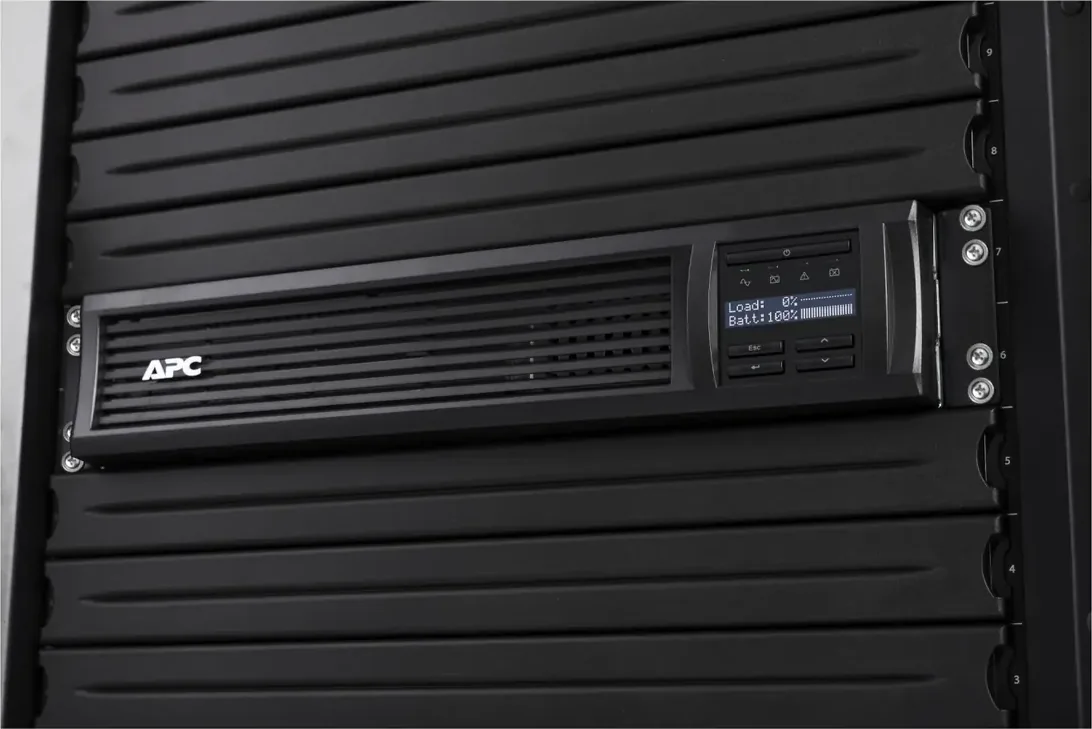
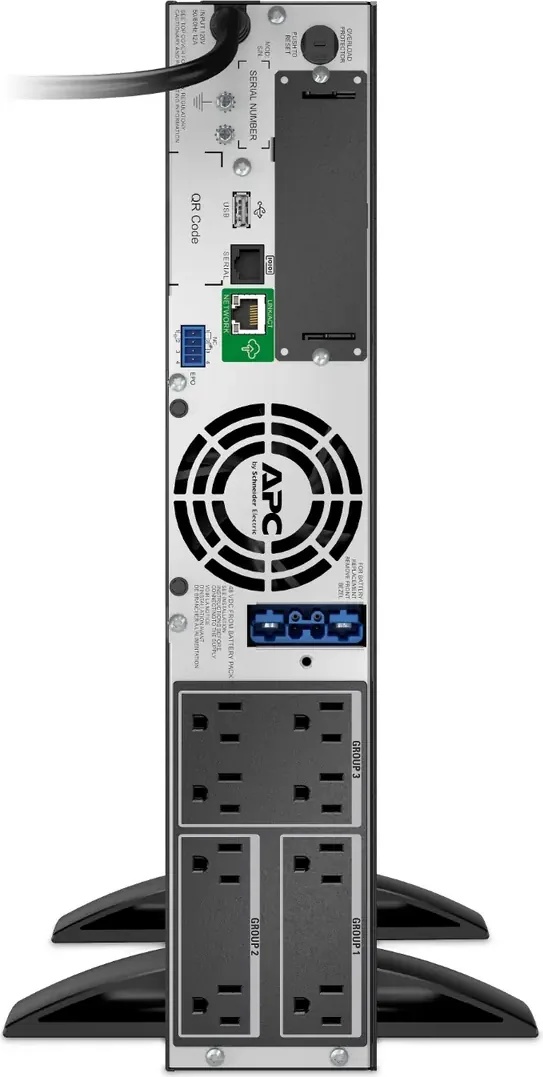
The APC SMT1500RM2UC is a useful example of why the family number is insufficient: the documented model has a 1,000 W output ceiling. The SMX1500RM2UC offers a different capacity and external-battery proposition. Neither name establishes suitability for an illustrative 900 W workload until VA, expected growth and runtime are reviewed. Put the exact proposed SKU and applicable rating in the supplier response rather than accepting a generic 1500VA description.
Specify conversion behavior independently of minutes
If the project requires online double conversion, say so and identify the operating mode in which that behavior is required. The CyberPower OL1500RTXL2U is an online example; the SMX1500RM2UC is line-interactive despite supporting runtime expansion. A larger battery configuration does not change the basic topology. Ask bidders to identify any ECO or bypass modes that could alter the assumptions behind their proposed operating configuration.
A requirement for more battery time belongs in a different field. Define the protected watts, required duration, battery configuration and source of the planning estimate. Ask for the relevant manufacturer curve or sizing output, with its conditions. Do not accept half-load minutes unless the actual watt value is also stated. Allow the supplier to propose a supported battery arrangement, but require every enclosure and cable in the quoted bill of materials.
Make the physical and electrical interfaces explicit
List the approved input connection, source ownership and required confirmation of installation suitability. A compatible-looking plug is only one part of the supply review. The facility owner needs to confirm the circuit and installation against the current instructions. Keep electrical work as an assigned project task rather than leaving a delivery technician to discover a source mismatch. An adapter is not an acceptable silent substitution for the specified source interface.
Specify usable rack dimensions, mounting arrangement, cable access and service clearance. Ask for the rail kit identity, included brackets and support instructions. Reserve space for external batteries when required. The base chassis height should not be presented as the whole system footprint. Receiving access and handling matter too: the order should identify who can accept the shipment, move it to the rack and coordinate removal of the old equipment.
Purchase the required management outcome
Describe whether the requirement is cloud visibility, local monitoring, a USB-connected host, or coordinated shutdown across several hosts. These are separate functions. Ask for the exact management card, software edition, supported operating systems, licensing and continuing update entitlement. A port labelled Ethernet does not establish that every local shutdown function is available. Require a diagram of the command path when the service depends on switches or a management server remaining powered.
Include ownership of alerts and settings. A specification that requests email notifications without identifying a recipient, escalation route and maintenance owner leaves an incomplete operating system. State what must work when the internet connection is unavailable. Where remote access is essential, ask how the proposed management architecture meets that condition. The UPS itself does not create an independent network path merely because an optional card can be fitted.
Require evidence at quotation and acceptance
A response schedule should contain the full model, manufacturer document revision, included accessories and a clear exception against every mandatory field. Separate confirmed compliance from an unanswered question. For example, a bidder may meet the watt rating while omitting the card needed for the stated shutdown design. Mark that proposal incomplete rather than allowing a later installer to interpret a broad claim of equivalent functionality.
Acceptance should verify identity, supplied contents, configuration records and the agreed service outcome under an approved procedure. Notification receipt, software communication and application shutdown need distinct observations. Do not write a destructive outage experiment into a general purchasing template. Let the service owner and qualified installer define a controlled exercise appropriate to the equipment. Preserve the resulting configuration and evidence so future changes can be assessed against the approved purchase.
A useful response form asks the bidder to enter an actual value, source and exception for each field. For example, a proposal might confirm the required watt ceiling but leave shutdown licensing pending. Keep that proposal conditional until the licensing answer arrives; do not allow a single compliant checkbox to conceal the gap. Give each outstanding question a resolution owner and an approval deadline tied to the order, rather than quietly moving it into commissioning. This makes the specification usable as a purchasing control and helps a second reviewer understand why an otherwise attractive configuration has not yet been accepted.
| Specification field | Buyer supplies | Bidder must return |
|---|---|---|
| Service outcome | Required stopped or continuing service state | Proposed supported workflow and exceptions |
| Capacity | Watts, VA and operating scenarios | Applicable exact-SKU limits at intended voltage |
| Endurance | Required duration and reserve rationale | Battery configuration and dated runtime evidence |
| Installation | Approved source and usable rack dimensions | Input, drawing, mounting kit and complete footprint |
| Management | Hosts, required actions and network constraints | Card, supported software, licenses and ownership |
| Acceptance | Approver and permitted service window | Evidence schedule and unresolved conditions |
Understand the benefits and costs of a detailed brief
- Pros: Suppliers quote comparable systems; missing accessories become visible; the acceptance owner can explain why a feature is necessary.
- Cons: Preparing the inventory takes work; overly rigid brand restrictions may exclude suitable configurations; unresolved requirements can delay a quotation.
Use requirements to distinguish necessity from preference. A mandatory approved source interface is different from a preferred dashboard appearance. Ask suppliers to propose alternatives in a separate section with documented differences, rather than replacing the requested system inside the main offer. This preserves useful competition while making the purchasing decision reviewable. The final specification should be understandable to someone who did not attend the original planning meeting.
A practical sign-off asks whether the chosen configuration meets the documented workload, runtime, interfaces and operating workflow, and whether somebody owns each remaining action. If an answer depends on a future battery pack, card or license, include it now. A complete and modest specification is more useful than a long feature list whose most consequential assumptions remain implicit.
Compare relevant models on Amazon
Amazon.com model searches can include alternatives. Confirm the full model, electrical configuration, seller, condition, included hardware and warranty.
Sources and research basis
- Schneider Electric SMT1500RM2UC specificationsPrimary documentation · checked 15 October 2026
- Schneider Electric SMX1500RM2UC US pagePrimary documentation · checked 15 October 2026
- Schneider Electric SMX1500RM2UC exact-model datasheetPrimary documentation · checked 15 October 2026
- CyberPower OL1500RTXL2U official US product pagePrimary documentation · checked 15 October 2026
- CyberPower current Smart App Online catalogPrimary documentation · checked 15 October 2026
Thumbnail image credits
- Product photograph: Schneider Electric / APC: APC SMT1500RM2UC manufacturer product photograph
- Product photograph: Schneider Electric / APC: SMX1500RM2UC manufacturer product photograph
- Product photograph: CyberPower, extracted from its manufacturer datasheet: CyberPower OL1500RTXL2U manufacturer product photograph
Recommendations interpret the linked documentation. We have not physically tested this equipment and claim no original runtime, acoustics, switching or efficiency results. Report a correction.