What should drive the choice?
Require evidence for the actual unit and budget the complete restoration. Walk away when model identity, battery condition or essential parts cannot be resolved.
Research based on manufacturer documentation. We have not physically tested this equipment.
Check the exact equipment
Amazon.com model searches can include alternatives. Confirm the full model, electrical configuration, seller, condition, included hardware and warranty.
Buy an identifiable unit, not a familiar front panel
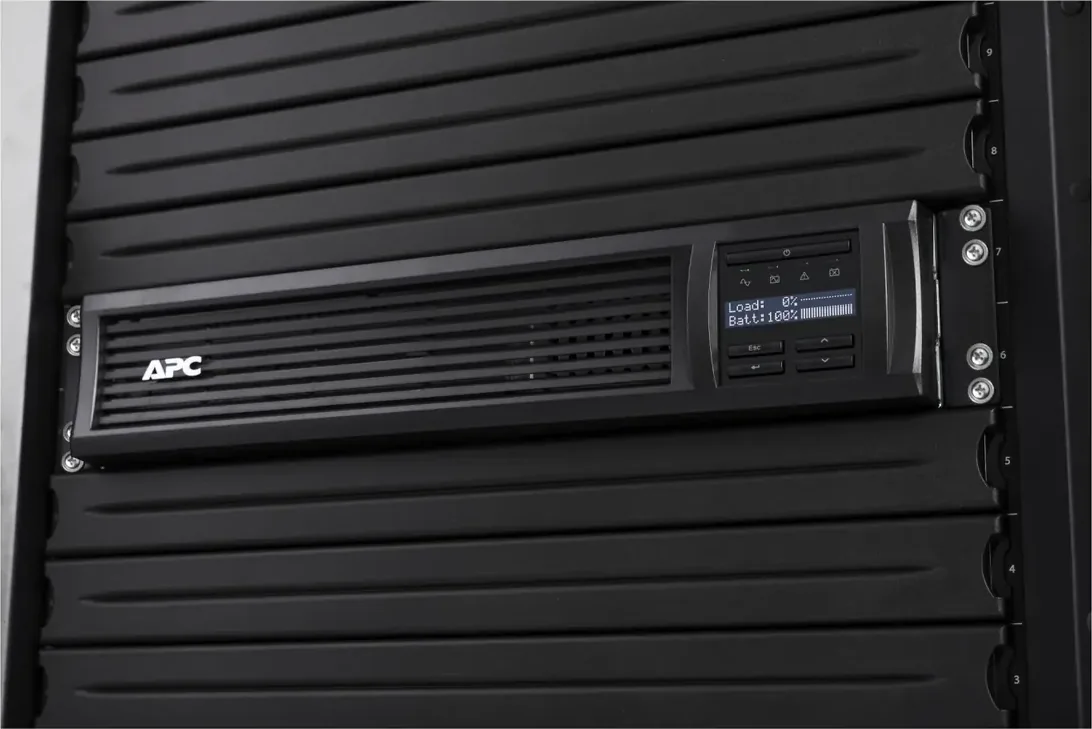
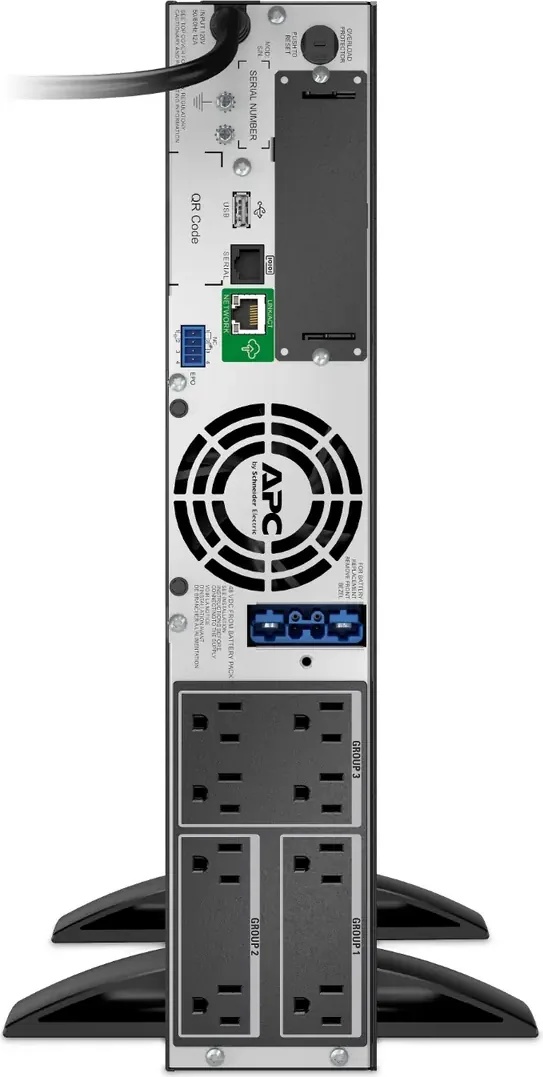
A used rack UPS listing can look attractive while leaving its most expensive uncertainties out of view. A front photograph does not establish the regional SKU, battery age, management configuration or mounting contents. Begin by requesting photographs of the actual identity label and rear panel, with a written inventory of included parts. A stock image is useful for recognition but cannot document the specific item offered for sale.
Preserve every suffix. APC SMT1500RM2UC and SMX1500RM2UC belong to different configurations despite similar naming. The latter's documented external-battery path is a material purchase distinction, not a cosmetic variation. Confirm the unit against current manufacturer records before asking whether it fits your workload. An invoice shortened to Smart-UPS 1500 leaves too much room for a different chassis, voltage or management bundle to arrive.
Separate chassis history from battery history
Ask when the UPS was manufactured, how it was used, why it was removed and whether it has known faults or repairs. Ask separately when the current batteries were installed and what evidence identifies them. A recently cleaned enclosure can contain old batteries, while an older chassis can have a documented replacement cartridge. Neither condition alone demonstrates the remaining runtime your rack requires.
Require the replacement part identity and supplier record when the seller claims new batteries. Find out whether the description means a complete supported cartridge or an undocumented cell replacement. Do not assume a date written on tape proves compatibility or workmanship. If the history is incomplete, treat a correct replacement and approved service as an unresolved cost, rather than assigning an optimistic remaining service life to the existing battery.
Interpret demonstrations within their limits
A photograph of an illuminated display proves little about battery endurance. A reported self-test pass can be useful evidence of the recorded status at that time, but it does not establish minutes at your workload. Request the date, operating conditions and any reported alarms. Keep the seller's observations separate from manufacturer runtime information and from the commissioning observations you will obtain after purchase.
Do not ask a seller to create an improvised full-discharge demonstration on unknown equipment. Agree on a suitable inspection or evaluation process with the manufacturer, service provider or responsible technician. If operational acceptance matters, make the permitted return or rejection conditions explicit before money changes hands. The goal is a reviewable purchase decision, not an unsupported test that introduces new wear or hazards.
Inspect condition without inventing a reliability score
Request clear images of connectors, vents, casing, rack ears and accessible battery areas that the seller can inspect under the proper instructions. Look for damage, missing covers, corrosion, deformation or signs of liquid exposure. These observations can justify rejection or a professional inspection, but a clean appearance cannot prove healthy internal electronics. Avoid translating cosmetic condition into an invented reliability percentage.
Ask about storage after removal from service. A UPS kept disconnected for an extended period has a different battery history from one maintained according to its instructions. Shipping and storage records may be incomplete; make that uncertainty visible. For APC equipment, Schneider publishes battery-storage guidance, but the applicable exact-model documentation and support advice should govern the delivered unit. Do not apply an instruction for a different battery chemistry or UPS family.
Check every part needed for installation
List rails, mounting ears, battery connectors, front panels and communication cables. Confirm the exact rail kit supports the chassis and rack arrangement. Used units often travel separately from their original mounting hardware, so a seller's phrase rack ready needs supporting detail. Price the required supported replacement parts before accepting a chassis-only offer. The availability of a generic shelf does not resolve every mounting requirement.
For an expandable SMX1500RM2UC purchase, distinguish the base UPS from any external battery enclosure. Confirm supported pack identity, cables, included batteries and physical condition for each item. A photograph of several matching boxes does not establish a complete functioning configuration. Document the intended installed layout and required runtime before assigning value to additional enclosures that may themselves need battery service.
Resolve management and ownership transfer
Determine whether a network card is included, identify its hardware and firmware, and establish an authorized method to transfer or reset administration. Do not rely on a previous owner's screenshots as proof of continuing cloud access or software entitlement. If the project requires local shutdown integration, verify the supported card and software path separately from cloud monitoring. Each has its own compatibility and account questions.
Request proof that the seller is entitled to dispose of the equipment, and retain the invoice and serial record securely. Ask the manufacturer or authorized support channel about regional service eligibility and any warranty claim; seller assurances are not manufacturer confirmation. Some costs involve freight and handling rather than repair parts. Establish who pays those costs and how a damaged or nonconforming unit will be returned.
Compare a restored configuration with alternatives
Build a complete cost worksheet containing the used chassis, required battery work, correct rails, management components, freight and professional service. Use actual quotations rather than a made-up market price. Compare that resulting configuration with a documented alternative that meets the same capacity, topology and runtime requirements. A low chassis price is meaningful only after the necessary restoration work is included.
Consider downtime and uncertainty as purchasing constraints even when they cannot be reduced to a precise currency figure. A remote branch with no spare window may need a different procurement route from a lab that can evaluate an uncommitted unit. Decide in advance which missing records are acceptable and which are disqualifying. This prevents familiarity with a brand from overriding the evidence needed for the particular service.
Set a document-request cutoff before negotiating the final purchase. If the seller supplies the rear-panel photographs but cannot identify the battery part, the buyer can decide whether a documented replacement makes the offer acceptable. That is a concrete condition to resolve, rather than a reason to keep asking vague questions indefinitely. Record accepted unknowns explicitly and ensure the return arrangement covers any promised identity or condition that receiving cannot confirm. This approach also makes declining an unsuitable listing straightforward: the decision follows missing evidence needed by the rack, rather than a speculative judgment about the seller's equipment.
Make the acceptance decision explicit
- Pros: A documented used unit may reuse a suitable chassis and fit a nonurgent project with qualified inspection available.
- Cons: Battery history, missing hardware, shipping risk and support eligibility can erase the apparent saving or delay deployment.
Accept only when the full model is identified, the complete installation can be assembled, and the remaining uncertainties fit the project's agreed risk and return conditions. Record what the seller established and what still requires commissioning. If essential facts remain unavailable, decline the item rather than turning an operational rack into the experiment needed to discover them.
Compare relevant models on Amazon
Amazon.com model searches can include alternatives. Confirm the full model, electrical configuration, seller, condition, included hardware and warranty.
Sources and research basis
- Schneider Electric SMT1500RM2UC specificationsPrimary documentation · checked 15 October 2026
- Schneider Electric SMX1500RM2UC US pagePrimary documentation · checked 15 October 2026
- Schneider Electric SMX1500RM2UC exact-model datasheetPrimary documentation · checked 15 October 2026
- Schneider Electric battery discharge during storagePrimary documentation · checked 15 October 2026
Thumbnail image credits
- Product photograph: Schneider Electric / APC: APC SMT1500RM2UC manufacturer product photograph
- Product photograph: Schneider Electric / APC: SMX1500RM2UC manufacturer product photograph
Recommendations interpret the linked documentation. We have not physically tested this equipment and claim no original runtime, acoustics, switching or efficiency results. Report a correction.