What should drive the choice?
Choose AP9562 for a compact ten-outlet distribution job. Choose PDUMH15 when local current visibility and its thirteen-outlet layout solve a clear need.
Research based on linked manufacturer documentation. We have not physically tested this equipment.
Start with whether someone needs to see the current
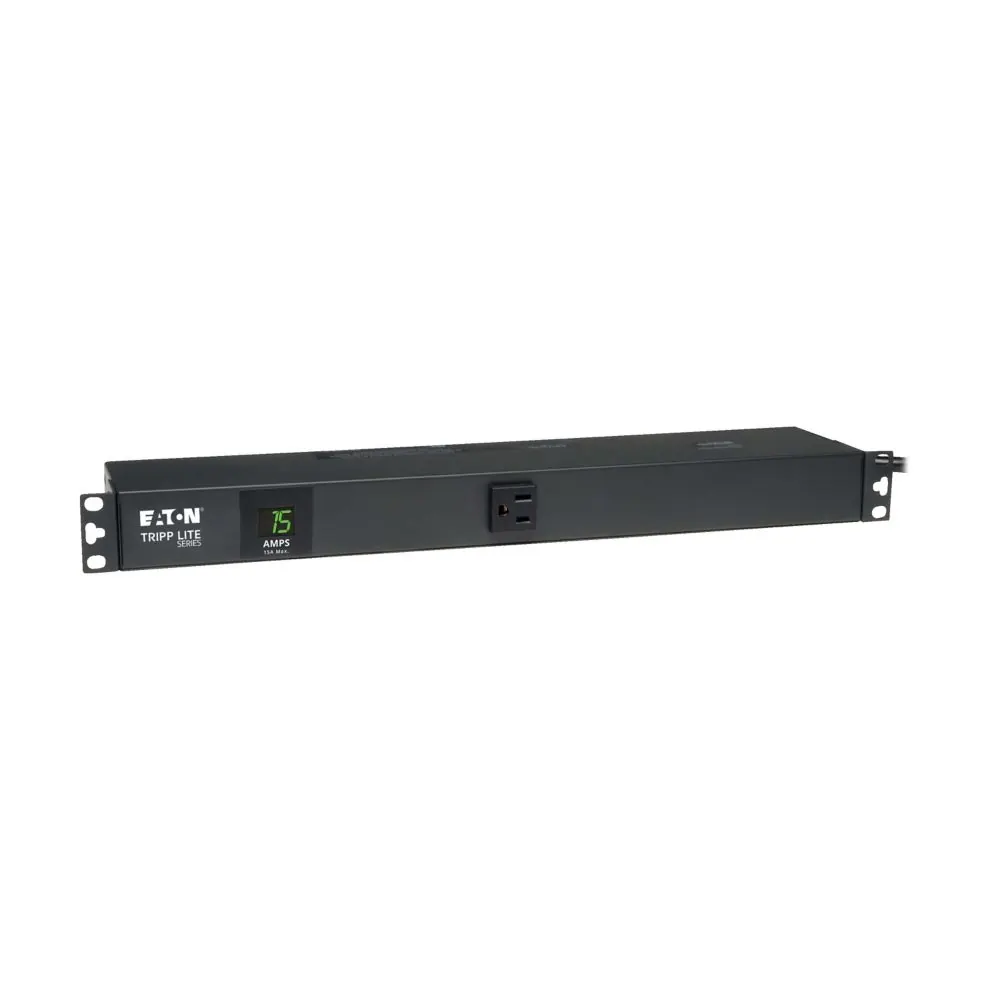
The APC AP9562 vs Eaton PDUMH15 decision is mainly about local visibility, outlet arrangement and physical fit. AP9562 is a basic distribution unit. PDUMH15 has a display that reports total output current in amps. That can make a technician's rack visit more useful, but it does not create remote monitoring or individual outlet switching. Choose the model that supports the operating procedure the site actually follows.
Both are plausible candidates for a small US 120V rack with compatible NEMA equipment cords. Neither should be selected simply because there are enough empty sockets. Count the equipment's power demand, each redundant power supply and the source's available capacity before evaluating convenience features. This comparison is based on manufacturer documentation. We have not measured the products, compared meter accuracy, tested breaker behavior or assessed long-term reliability.
The specification differences that affect a purchase
The AP9562 installation specification identifies a 1U basic model with ten NEMA 5-15 receptacles, a 12ft input cord, a 100 to 120V range and 12A UL-derated maximum current. Its chassis depth is approximately 2.25in. The current Eaton PDUMH15 specification gives thirteen 5-15R outlets, one at the front and twelve at the rear, a 15ft NEMA 5-15P cord, 120V nominal output and 12A continuous capacity.
| Buying consideration | APC AP9562 | Eaton PDUMH15 |
|---|---|---|
| Function | Basic distribution | Local metered distribution |
| Receptacles | Ten NEMA 5-15R | Thirteen NEMA 5-15R; one front and twelve rear |
| Published current planning figure | 12A UL derated | 12A continuous, agency derated |
| Input cable | 12ft; NEMA 5-15P | 15ft; NEMA 5-15P |
| Chassis depth | Approximately 2.25in | 4.5in; manufacturer lists 7.5in minimum rack depth |
| Visibility | No integrated current display established | Display reports aggregate current in amps |
Those are specification comparisons, not performance scores. Manufacturer descriptions that use a 15A product class or a 15A breaker do not justify treating 15A as the persistent operating target. For PDUMH15, Eaton explicitly distinguishes its breaker from its 12A continuous capacity. For AP9562, use the UL-derated figure in the installation document. The upstream source, installation conditions and actual loads can impose further constraints.
What the PDUMH15 meter buys you
A local current display can answer a practical question during a service visit: what is the combined load doing at this moment? A technician adding a device can record a reading before and after the approved change, and compare it with the rack's capacity record. That is easier than relying only on a list of power-supply nameplates, which may describe maximum capability rather than normal demand. The display provides an observation that can improve the record.
The benefit depends on when and how someone reads it. A photograph taken while servers are idle cannot establish their load during backups or another demanding workload. A display hidden behind equipment will be less useful than one visible from the service aisle. Decide who records readings, what operating conditions matter and which change requires review. Without that process, a meter can become an unused feature even though it was a reasonable line item on the quotation.
The meter does not provide a remote operating service
PDUMH15 is specified as a local metered PDU. Do not confuse its name with similarly named Eaton network or switched products. A local display does not establish an Ethernet interface, alert delivery, historical logging or a remote reboot command. If a branch office has no regular local technician, visibility only at the rack may leave the central team with the same information gap it had with a basic unit. A monitored model may be the appropriate category.
Likewise, aggregate amps do not identify the power use of each connected server. They do not directly provide a per-device energy bill or prove that the rack has balanced redundant feeds correctly. If those are requirements, specify the measurement granularity, units and reporting interval before comparing model names. Our PDU types guide separates basic, local metered, monitored and switched capabilities so the purchasing request describes the intended result.
Ten versus thirteen outlets changes cable planning
Three additional receptacles can be valuable when the load consists of many small appliances, but they do not add electrical capacity. A rack with twelve low-draw cords may fit PDUMH15 better even if its total current is modest. A rack with fewer high-demand devices can reach its limit with unused outlets remaining. Keep a plug inventory separate from the current estimate so neither number hides the other.
PDUMH15's one-front, twelve-rear arrangement favors a mostly rear-connected equipment layout. Consider what the front outlet would serve and whether leaving it available for an approved service tool is useful. For AP9562, inspect the product drawing and intended mounting orientation against the cable route. Do not assume that every NEMA adapter will sit beside every other plug without blocking a neighbor. Bring the actual plug shapes into the layout review, particularly for small appliances supplied with bulky external adapters.
Depth can decide the comparison in a small cabinet
A shallow PDU body is attractive in a compact wall cabinet, but body depth alone does not describe the working envelope. Add the projection of connected plugs, the bend radius of their cables, any retention hardware and the clearance needed to close the door. Eaton's listed minimum rack depth provides a useful warning that its 4.5in chassis is not the entire installation space. Measure the available clearance in the planned position.
Also consider the technician's hand. A unit may fit on paper while leaving no practical access to the receptacle a person needs to identify or disconnect. Place labels where they remain readable with the cables attached. Keep power wiring from obscuring network port labels or airflow paths. These considerations can favor the simpler AP9562 in a constrained rack, or favor PDUMH15 when its display and rear outlet arrangement align with a deeper cabinet's service access.
A longer input cable helps only along the actual route
The difference between a twelve-foot and fifteen-foot attached cord is worth measuring, not guessing. Trace the intended path from the PDU to the source, including vertical runs, turns and appropriate service slack. A source that appears close in a photograph can require a longer approved route around a cabinet. Conversely, surplus cable can complicate a small rack if there is no sensible place to manage it.
Confirm the source receptacle and its capacity before treating cord reach as the final obstacle. Neither product creates UPS runtime or an independent backup feed merely by being plugged into another outlet. For dual-supply equipment, map each cord through the PDU and upstream source. Two distributions sharing one dependency may be useful for cable organization, but the failure analysis still needs to show which equipment remains powered when that dependency is unavailable.
Compare the installed package
Request exact model identity, included mounting parts, the applicable warranty and the seller's condition description. Used rack accessories may arrive without the parts shown in manufacturer photographs. Include any missing hardware and the time needed to establish safe mounting in the installed comparison. Current listing prices vary, so this article does not assign a price advantage or a payback period to either product.
- Count cords and identify unusually large plugs.
- Document expected operating and meaningful peak load.
- Confirm a compatible source and the relevant current limits.
- Measure cabinet clearance and the routed input cable distance.
- Decide whether a local current reading will be used and recorded.
- Choose a different PDU category if remote alerts or outlet control are required.
Which is the better fit?
Choose AP9562 when ten outlets, compact depth and basic distribution meet the requirement. Choose PDUMH15 when its additional receptacles and local current display improve a real maintenance workflow, and the cabinet has adequate clearance. The latter's meter is a useful distinction, but it is not a reason to overlook source limits or to expect remote management. The best purchase is the one whose electrical, physical and operating requirements are all documented before it enters the rack.
Check the exact models
Confirm the model suffix, electrical configuration, seller, condition, included hardware and warranty. These are Amazon.com model searches; results can include alternatives.
Sources and research basis
- Schneider Electric AP9562 product pagePrimary documentation · checked 15 October 2026
- AP9562 installation instructions and specificationsPrimary documentation · checked 15 October 2026
- Eaton PDUMH15 specificationsPrimary documentation · checked 15 October 2026
- Eaton metered rack PDU owner’s manualPrimary documentation · checked 15 October 2026
Manufacturer specifications describe the documented configuration. Buying recommendations are our interpretation of those features. No original runtime, acoustic, efficiency, switching or software test is claimed. Report a correction.