What should drive the choice?
Choose SMT1500RM2UC when its 1,000 W limit and internal-battery runtime meet the job. Choose SMX1500RM2UC when a documented load or external-battery requirement justifies its different configuration.
Research based on linked manufacturer documentation. We have not physically tested this equipment.
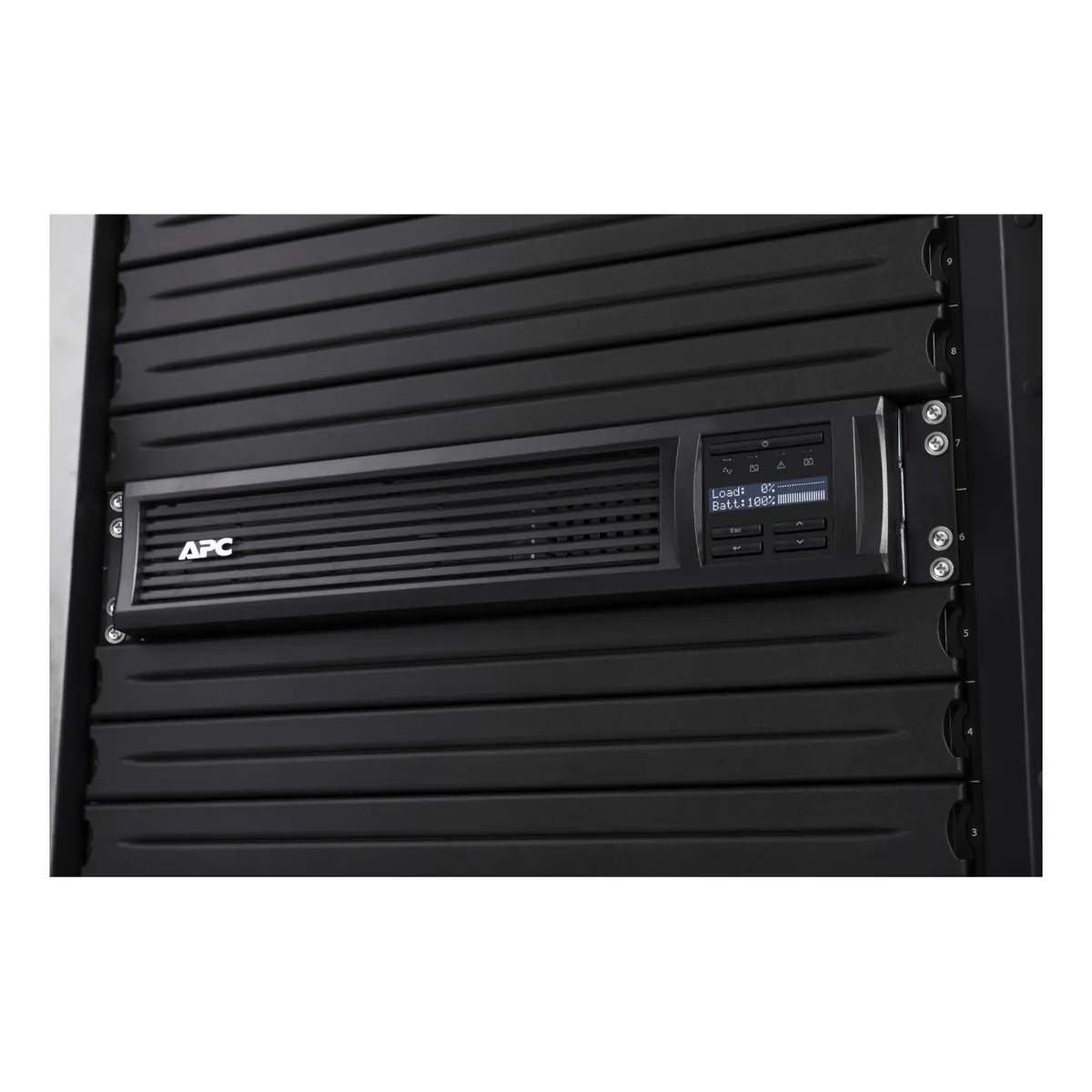
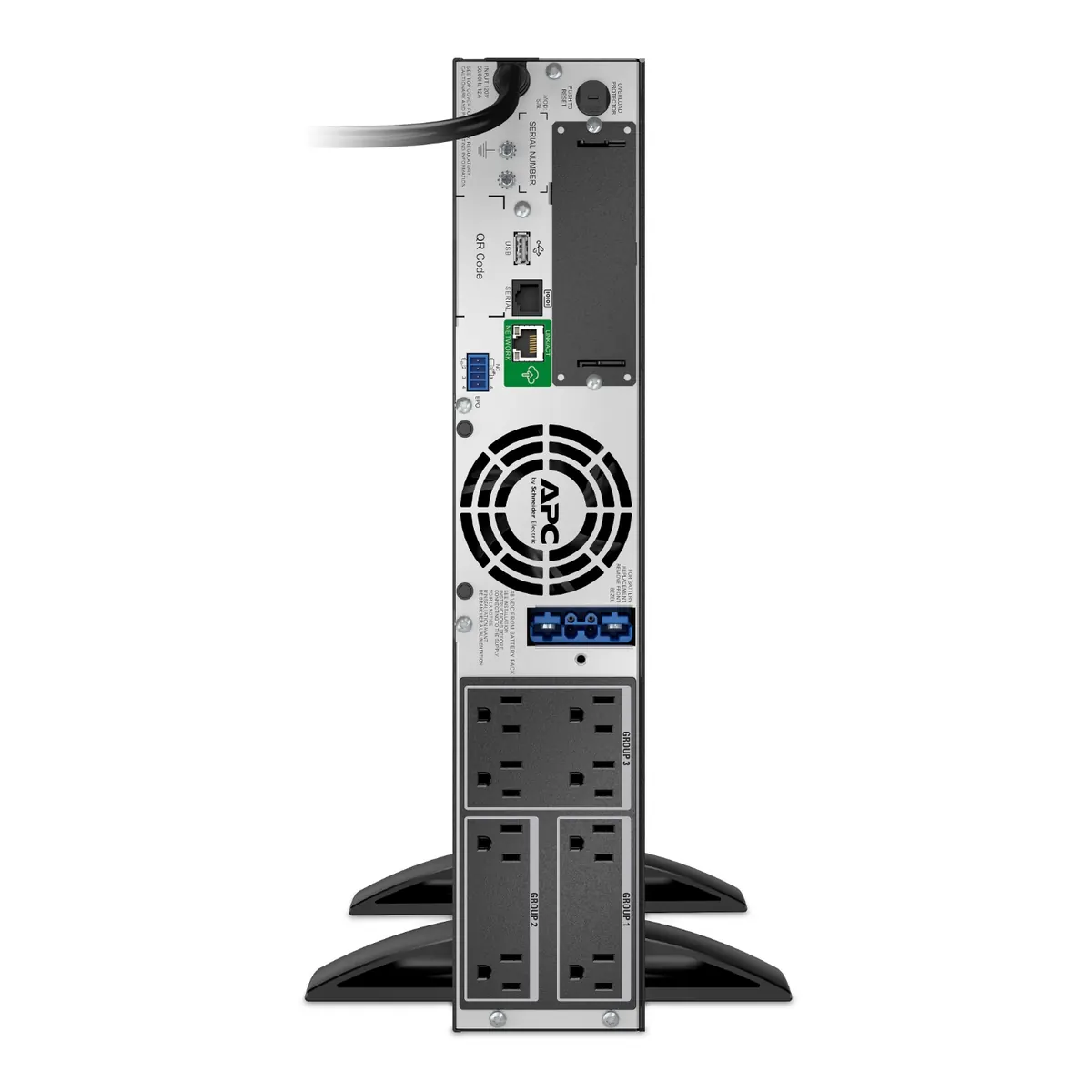
The useful difference is the requirement each one meets
The APC SMT1500RM2UC and SMX1500RM2UC share a familiar 1500 family label, but they are not equivalent purchases. The SMT is a straightforward rack candidate for a load within its published output and internal-battery runtime. The SMX offers more watt capacity and a documented route to additional batteries. A buyer who needs extra minutes should evaluate that route separately from a buyer who simply needs a higher output ceiling.
This comparison uses manufacturer documentation for the complete US model numbers. It contains no discharge testing, acoustic measurements or reliability scores. Its purpose is to turn two similar product names into a purchase specification that an installer and supplier can both understand. Keep the full suffixes on quotations: a different regional voltage or a package with a management card can change the installation and delivered contents.
Compare both limits, not the 1500 label
The SMT1500RM2UC US page specifies 1,440 VA and 1,000 W. The SMX1500RM2UC manufacturer listing specifies 1,440 VA and 1,350 W. Both are 120 V, line-interactive sine-wave designs. The SMX therefore adds 350 W of rated real-power capacity while retaining the same stated VA limit. Neither product name means a 1,500 W output allowance.
| Purchase fact | SMT1500RM2UC | SMX1500RM2UC |
|---|---|---|
| Published output | 1,440 VA / 1,000 W | 1,440 VA / 1,350 W |
| Input plug | NEMA 5-15P | NEMA 5-15P |
| Output receptacles | Six NEMA 5-15R | Eight NEMA 5-15R |
| Format | 2U rackmount | 2U rack/tower |
| Runtime expansion | Assess internal-battery runtime | Up to five SMX48RMBP2U packs |
An illustrative rack measured at 1,100 W is already above the SMT's watt rating. The SMX leaves 250 W of arithmetic difference at that load, provided the VA requirement also fits. That calculation establishes a capacity distinction only. It does not establish a recommended margin or tell you how long the batteries will last. A rack measured at 650 W could fit either watt limit, leaving runtime and installation as the more useful decision points.
Measure the entire protected group during meaningful operating states. Include storage work, backup jobs and any load transferred when another power source fails. A server power supply's maximum rating is not its measured consumption. Conversely, a quiet idle reading is not proof that the complete rack remains below the limit during its busiest task. Document the assumptions so a later equipment addition has a clear trigger for reassessment.
The SMX battery option answers a separate question
Schneider documents support for up to five SMX48RMBP2U external battery packs on SMX1500RM2UC. This is the most consequential architectural difference for a buyer seeking longer operation at an otherwise modest load. A higher inverter rating and more stored energy are separate requirements. Select the base capacity to support the equipment, then select the documented battery configuration to support the target duration.
Write the outage objective in minutes and actions. For example, a site might need time to finish storage activity, stop services, shut down hosts and leave the network available until those commands finish. Another site might require continued operation through a specific interruption window. Those are distinct acceptance tasks. Neither can be settled by observing that one product has a larger number in a retailer's runtime column.
Compare manufacturer curves at the same watt load and the intended battery configuration. Comparing half-load minutes is misleading here: half of the SMT watt rating is 500 W, while half of the SMX rating is 675 W. Those are different loads. Do not multiply an internal-battery runtime figure by the number of added packs. Use the supported configuration's published curve and validate the completed shutdown procedure during commissioning.
External packs also create a cabinet and service requirement. Reserve their actual space, mounting support and cable access before ordering. Include their batteries in the replacement inventory and ask for configuration-specific recharge information. A runtime requirement that includes repeated interruptions needs a recovery plan as well as an initial discharge window. The base chassis occupying 2U does not make the expanded installation a 2U system.
Check the rack, outlets and package together
The exact-model datasheets identify NEMA 5-15P input connections. The SMT has six 5-15R outlets; the SMX has eight. This simplifies the initial connector comparison, but the site supply still needs to satisfy the manufacturer's installation requirements. More output receptacles do not increase the total supported watts. Build an outlet schedule before deciding that the larger count removes the need to assess distribution.
Count the network devices required for shutdown, not just the servers. A storage system and hypervisor cannot coordinate over an unpowered switch. Also check the actual plugs and adapter bodies on the equipment. A nominally available receptacle is less useful when neighboring plugs block it. Any distribution arrangement needs to match the approved installation; do not let a loose collection of accessory strips become the power design.
The SMX's rack/tower format offers placement flexibility, while the SMT is sold as a rackmount unit. Choose the intended format before evaluating accessories. Confirm rails, brackets, supports and cable contents with the actual seller. Manufacturer package descriptions are useful for a new unit, but they do not establish what accompanies a used chassis. Require a delivered-content list when comparing two otherwise similar quotations.
For rack fit, measure usable mounting depth and rear clearance using the current drawings. A 2U gap only establishes height. Rear doors, power distribution equipment and cable bends still need space. Think through battery replacement and removal of the complete unit while neighboring equipment remains installed. That service view can change the preferred location even when both units fit on paper.
SmartConnect does not finish the shutdown design
Both manufacturer descriptions include SmartConnect cloud monitoring. The SMT page also describes USB or serial graceful shutdown, and the SMX datasheet lists its communication provisions. Treat monitoring and automated shutdown as separate line items in the specification. Confirm the current software, supported operating systems, optional management hardware and feature terms for the exact package rather than inferring them from an Ethernet socket.
For a single local host, document the communication cable and shutdown software. For several hosts or virtualized workloads, document every dependency and the order of operations. A successful dashboard connection is useful evidence of monitoring access, but it does not prove that storage stops safely or that a remote host receives the correct command. Give each required outcome an owner during acceptance.
Cloud access also needs an operating procedure. Establish who receives battery warnings, who can change settings, and how the site is managed when internet service is unavailable. Request details about any optional network card in the quote. A base C model and a differently suffixed bundle should be compared by actual included parts, not by abbreviated product titles.
Which configuration belongs on the order?
Choose SMT1500RM2UC when both measured electrical limits fit, the internal-battery curve supports the shutdown task, and a rack installation is intentional. Its case is strongest when the SMX's runtime-expansion feature does not solve a documented need. The extra capability should earn its place in the project through a requirement rather than through the appearance of a more advanced family name.
Choose SMX1500RM2UC when the 1,350 W limit resolves a real capacity problem or compatible external batteries are needed for a defined runtime target. Include the complete battery and management configuration in the order. Both remain line-interactive designs; a requirement for online double conversion calls for a different comparison. For deeper model-specific checks, see the SMT1500RM2UC review and SMX1500RM2UC review before requesting a matched quote.
Check the exact models
Confirm the model suffix, electrical configuration, seller, condition, included hardware and warranty. These are Amazon.com model searches; results can include alternatives.
Sources and research basis
- Schneider Electric SMT1500RM2UC US product pagePrimary documentation · checked 15 October 2026
- Schneider Electric SMT1500RM2UC exact-model datasheetPrimary documentation · checked 15 October 2026
- Schneider Electric SMX1500RM2UC US marketplacePrimary documentation · checked 15 October 2026
- Schneider Electric SMX1500RM2UC exact-model datasheetPrimary documentation · checked 15 October 2026
Manufacturer specifications describe the documented configuration. Buying recommendations are our interpretation of those features. No original runtime, acoustic, efficiency, switching or software test is claimed. Report a correction.