What should drive the choice?
Use the SMT2200RM2UC lower published rated values for preliminary sizing, and obtain written clarification if the discrepancy matters. Choose SMT3000RM2UC only when its capacity and L5-30P installation both fit.
Research based on linked manufacturer documentation. We have not physically tested this equipment.
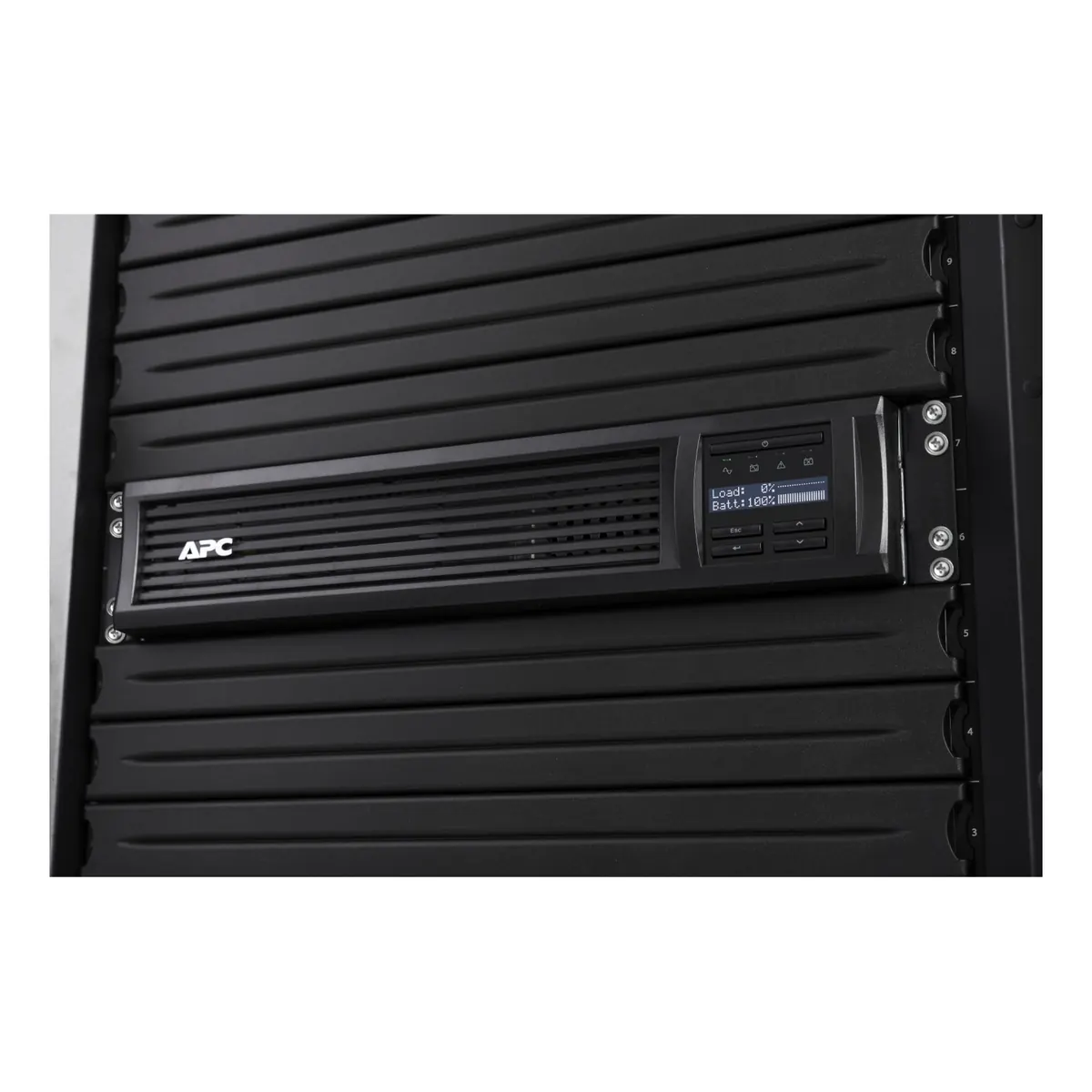
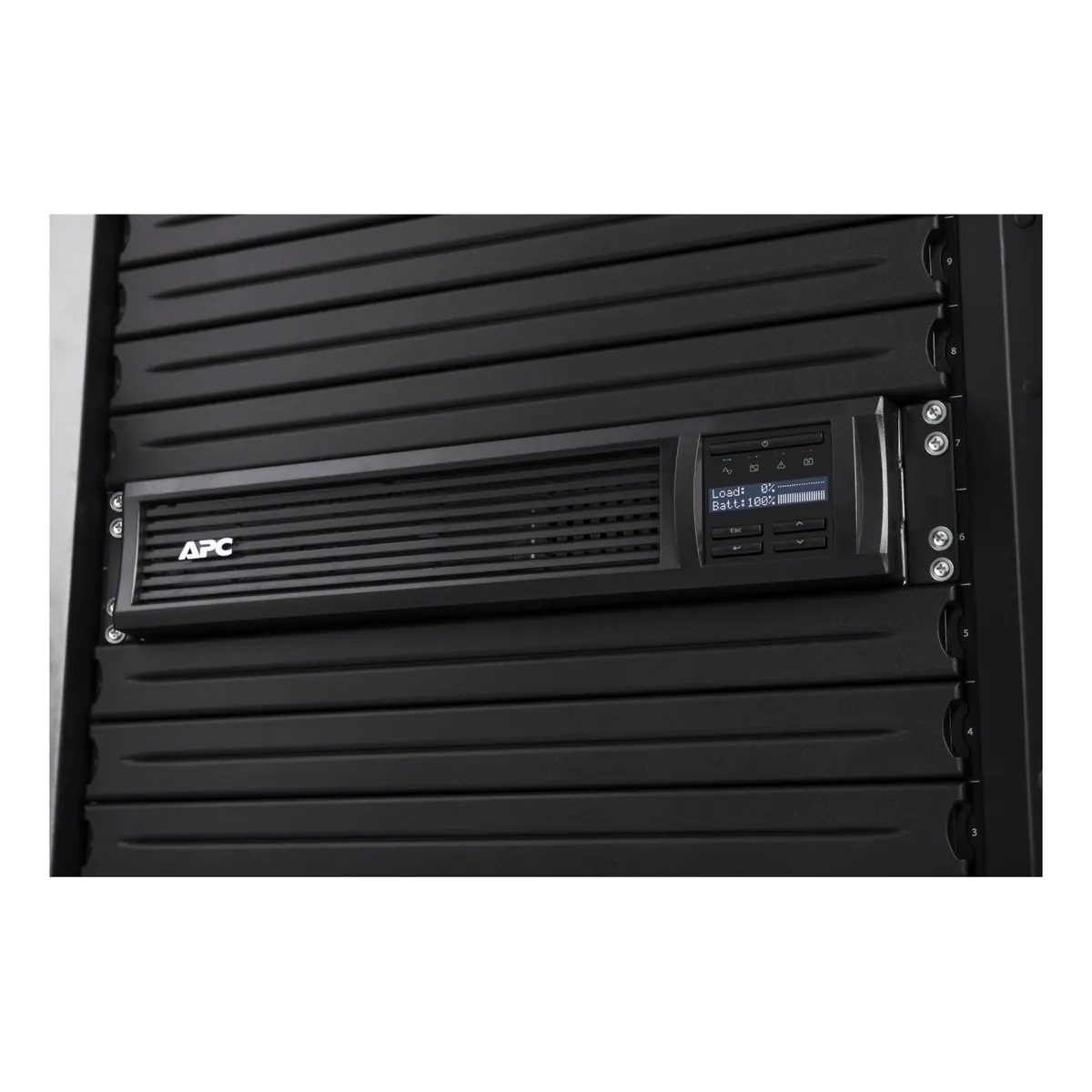
Start with the available supply
The APC SMT2200RM2UC and SMT3000RM2UC are both plausible candidates for a 120 V equipment rack, but moving between them is not simply a capacity upgrade. Their specified input plugs differ. That can change facility work, installation timing and the complete cost of putting the equipment into service. Establishing the site connection first prevents a comparison from favoring a UPS that cannot be installed as planned.
This comparison covers the full US C-suffix models using manufacturer specifications. We have not measured runtime, noise, efficiency or transfer behavior. The recommendation also accounts for an unusual conflict in Schneider's SMT2200RM2UC fields. A buyer whose load depends on the higher figure needs a written answer for the exact installation before ordering. Product-family arithmetic cannot resolve contradictory capacity documentation.
The SMT2200RM2UC figures require an explicit caveat
The manufacturer's current detailed SMT2200RM2UC listing gives rated output of 1,920 VA and 1,920 W, while separately giving maximum configurable power of 2,200 VA and 1,980 W. The current US product overview also uses the lower pair. We use 1,920 VA / 1,920 W for this preliminary comparison and do not treat the higher fields as an unconditional operating allowance.
The SMT3000RM2UC specification lists 2,880 VA and 2,700 W for both rated and maximum configurable output. This gives 780 W more capacity than the lower SMT2200RM2UC watt rating used here. The 3000 family label is not a 3,000 W rating, just as the smaller model's 2200 label should not override its current rated fields.
| Published detail | SMT2200RM2UC | SMT3000RM2UC |
|---|---|---|
| Rated output | 1,920 VA / 1,920 W | 2,880 VA / 2,700 W |
| Separate configurable fields | 2,200 VA / 1,980 W | 2,880 VA / 2,700 W |
| Specified input | NEMA 5-20P | NEMA L5-30P |
| Output receptacles | Six 5-15R plus two 5-20R | Six 5-15R plus two 5-20R |
| Topology and format | Line-interactive, 2U | Line-interactive, 2U |
Consider a measured rack at 1,600 W. Against the lower smaller-model rating, it has 320 W of arithmetic difference, while the larger unit has 1,100 W. These are capacity subtractions, not recommended margins or runtime predictions. Now consider 1,950 W: it exceeds the smaller model's rated value even though it is below the configurable watt value. That second case needs clarification or a different documented selection.
Measure VA as well as watts. Also account for the state in which another source has failed and redundant equipment moves more load onto the surviving path. A normal reading with both power supplies operating does not describe that failure state. The purchasing worksheet should explain which operating condition produced the requirement, allowing a reviewer to understand why either capacity was selected.
A different plug changes the installation scope
Schneider specifies a NEMA 5-20P input for SMT2200RM2UC and a locking NEMA L5-30P input for SMT3000RM2UC. Both exact-model listings identify a nominal 120 V system. Put the connector on the quote request and facility checklist beside output capacity. A rack currently connected through an ordinary 5-15 receptacle does not establish a suitable connection for either proposed replacement.
Have the responsible facility professional confirm the circuit, receptacle and installation requirements from the manufacturer instructions. Do this before reserving a change window. Include any approved electrical work in the comparison, together with access constraints and the time needed to schedule it. A UPS purchase that appears simple in a catalog becomes a different project when the required source is unavailable.
Do not infer from the outlet mix that the input connection is interchangeable. The outputs describe where protected equipment connects; the input describes the supply used by the UPS. Those are separate interfaces. Equally, an available receptacle somewhere in the room is not a completed installation plan. Record its location and the intended cord route so the installer can verify the actual arrangement.
Capacity does not decide battery endurance
A higher output rating makes the larger UPS eligible for loads that exceed the smaller unit's limit. It does not, by itself, establish a longer useful outage window at a shared load. Compare exact-model manufacturer runtime resources at the same measured watt demand. Keep the battery configuration and conditions visible in the worksheet, particularly when comparing new equipment with a previously owned unit.
Half-load comparisons are particularly unhelpful here. Half of 1,920 W is 960 W; half of 2,700 W is 1,350 W. A published runtime at those two percentages describes different equipment demand. Ask instead how each unit supports the same rack and the same shutdown objective. The answer must come from the applicable runtime resource and acceptance process, not from the nominal VA difference.
Separate continued-operation time from shutdown time. A site might prioritize maintaining a network through brief interruptions, while another needs a predictable storage and host shutdown sequence. Measure the duration of that sequence under controlled site procedures. Then select thresholds with enough remaining reserve to complete it. The UPS should be sized for an operational task that can be demonstrated, not a battery-minute target without an owner.
Shared 2U height does not prove a shared fit
Both products are described as 2U rackmount units, but check each current drawing, rail arrangement and handling instructions. Height is only one rack constraint. Usable depth, rear doors, vertical distribution equipment and cable bends determine whether the full installation fits. Do not assume the unit already in the rack establishes clearance for a different chassis.
Ask the actual supplier to enumerate rails, mounting parts, cables and battery contents. This is especially useful for used equipment, where an attractive listing can omit hardware needed for supported installation. Compare complete delivered packages. A missing mounting component adds procurement and scheduling work even when the bare chassis has the correct model label.
Prepare the future service route while the rack layout is still adjustable. Someone needs to reach the connections, perform the approved battery procedure and remove a chassis later. Place adjacent equipment and cable bundles accordingly. Service access is a practical purchasing criterion because the installed UPS will remain in use through battery replacement and equipment changes.
Specify the actual shutdown path
Schneider advertises SmartConnect cloud monitoring, USB or serial shutdown communication and a SmartSlot for optional network management on these models. The presence of cloud monitoring should not be treated as confirmation that a network management card is included. List the exact hardware and software needed for the operating systems, storage and virtualization environment used at the site.
For multiple hosts, map the sequence from outage detection to stopped applications, quiet storage and powered-off systems. Include the switches that carry commands in the protected inventory. Verify alert recipients and recovery behavior as part of commissioning. A dashboard that displays battery status solves a different task from coordinated shutdown, so each deserves its own acceptance check.
The final choice is SMT2200RM2UC when the confirmed installation and lower published rated limits support the documented load. Choose SMT3000RM2UC when its higher output is required and its L5-30P source is part of an approved installation. Obtain manufacturer clarification whenever the smaller model's conflicting capacity values affect the decision. The SMT2200RM2UC review and SMT3000RM2UC review provide separate purchase checks for each chassis.
Check the exact models
Confirm the model suffix, electrical configuration, seller, condition, included hardware and warranty. These are Amazon.com model searches; results can include alternatives.
Sources and research basis
- Schneider Electric SMT2200RM2UC US product pagePrimary documentation · checked 15 October 2026
- Schneider Electric SMT2200RM2UC US detailed specificationsPrimary documentation · checked 15 October 2026
- Schneider Electric SMT3000RM2UC US product pagePrimary documentation · checked 15 October 2026
- Schneider Electric SMT3000RM2UC US detailed specificationsPrimary documentation · checked 15 October 2026
Manufacturer specifications describe the documented configuration. Buying recommendations are our interpretation of those features. No original runtime, acoustic, efficiency, switching or software test is claimed. Report a correction.