What should drive the choice?
Consider it when a 2,700 W line-interactive UPS and an approved L5-30P supply match the project. It is not a drop-in upgrade for a rack with a 5-15 receptacle.
Research based on linked manufacturer documentation. We have not physically tested this equipment.
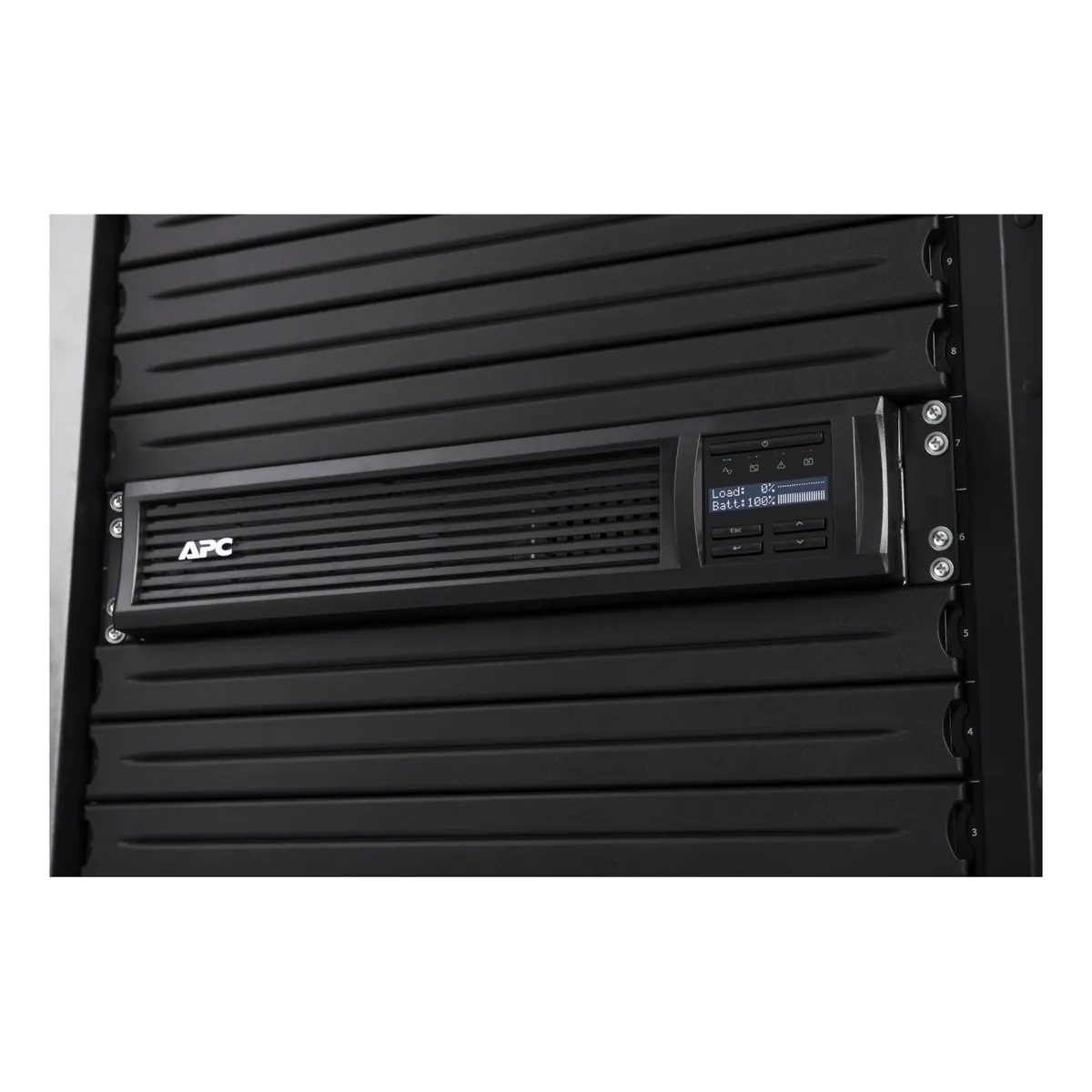
A capacity upgrade that starts at the supply
The APC SMT3000RM2UC can make sense for a 120 V rack whose measured load has exceeded the useful range of smaller units. It also illustrates why a UPS upgrade is more than a change in VA. The input connector, cabinet depth, service handling and shutdown configuration all need to fit. Buyers who begin with those constraints can decide quickly whether this model belongs on their quote request.
This is a specification-based review of the exact US C-suffix model. We have not run a battery discharge, sound measurement or fault test. Our focus is the purchase decision: what the published configuration permits, which assumptions need checking, and when a different class of UPS is a better starting point. The distinction is especially important when a listing uses a shortened Smart-UPS 3000 title without showing the complete model number.
Read the rated output separately from the name
The manufacturer's exact-model specification identifies 2,880 VA and 2,700 W rated output, a 120 V system, a NEMA L5-30P input, and six NEMA 5-15R plus two NEMA 5-20R receptacles. It is a 2U line-interactive, sine-wave model. The 3 kVA family label therefore should not be rewritten as 3,000 W in a purchasing document.
As a simple illustration, a measured 2,100 W rack is 600 W below the 2,700 W rating. That subtraction does not show battery runtime, a recommended margin, or the behavior of a changing load. A 2,800 W load would exceed the watt rating even if a retailer categorizes the unit as 3000 VA. Check apparent power as well, and capture load states that occur outside the normal quiet operating period.
The locking input deserves its own line on the installation ticket. Confirm a suitable supply and the manufacturer's installation requirements with the people responsible for the building. A connector adapter is not a substitute for matching supply capacity and the complete installation. If the rack currently has a smaller plug, include any approved facility work in the comparison cost and schedule. Otherwise the nominal UPS upgrade may remain unusable when delivered.
A 2U height does not mean a shallow UPS
Schneider's model documentation lists a chassis depth around 683 mm and a net weight around 44.28 kg. Consult the current drawing for the delivered revision rather than using those numbers as a handling plan. The practical implication is that an empty 2U slot in a shallow cabinet is not enough evidence of fit. Usable mounting depth, rear cable space and the rail arrangement all need separate confirmation.
Measure between the cabinet's actual mounting references, then inspect the space behind the UPS. Rear doors, vertical distribution strips and bundled power cords can consume space that appears available in a rack brochure. Ask where the input cord will travel and whether it remains serviceable after neighboring equipment is installed. Avoid positioning the design around a photograph taken with the rear door removed.
Plan the lift and support method using the installation manual and site procedures. Also plan how the unit will be removed later. A procurement decision that includes safe access and service clearance is more complete than one based only on watts per rack unit. Four-post rail inclusion, compatibility and condition should be confirmed with the seller. New manufacturer package contents cannot guarantee the contents of an open-box shipment.
Eight outlets need a connection map
The eight receptacles are shared outputs of one UPS. They do not divide the overall rating into eight independent budgets. Prepare a connection map for servers, network equipment and any approved PDU arrangement, keeping the rating of every downstream component visible. A distribution strip can add connection points; it cannot increase the UPS rating or make an incompatible plug acceptable.
For dual-cord equipment, define whether the goal is convenience or source redundancy. Connecting both server power supplies to this one UPS keeps both on one source. If an A/B design is required, determine the loading after loss of either path and check both UPS systems for that condition. This article does not certify a redundancy design, but that question often decides whether one larger UPS is the right purchasing strategy.
Outlet accessibility also matters. A cable schedule can reveal whether the two 5-20R positions and the six 5-15R positions suit the intended equipment without extra adapters. Use actual equipment connector information and allow service labels to remain readable. The cost of the UPS is easier to justify when the finished arrangement can be understood by the next technician.
Management should support an outage procedure
The SMT3000RM2UC combines SmartConnect monitoring with local communication and SmartSlot options in the manufacturer's description. Check the exact supplied components and current service terms. The base C model should not be treated as an NC network-card bundle merely because a retailer's family photograph shows an occupied management slot. The full suffix and bill of materials matter.
Write down the intended shutdown procedure before selecting accessories. A single host receiving a USB event is a different project from coordinated shutdown of several hypervisors and shared storage. Identify compatible software, necessary licensing and the network equipment that must stay alive while the sequence runs. Request confirmation for current operating system versions, since a recognizable software name alone does not prove support.
Once installed, use an approved commissioning procedure to check alerts, thresholds and recovery behavior. The organization should know who owns an alert and what action follows it. A monitoring dashboard has limited operational value if the notification goes to an unattended address or a remote site has no escalation path. These are workflow considerations, not evidence of measured product reliability.
Battery minutes must be tied to a common watt load
Do not rank the SMT3000RM2UC against a smaller UPS using each product's half-load runtime. Half of a 2,700 W rating is 1,350 W. Half of a 1,000 W rating is 500 W. The displayed minutes answer different questions. Use the exact manufacturer runtime curve at the same measured watts, with the battery configuration recorded beside the result.
If the requirement is controlled shutdown, measure how long the real shutdown sequence takes and include the supported networking and storage load. If the requirement is continued service through a longer interruption, decide whether the internal battery configuration is adequate before ordering. Battery capacity and inverter output are different properties. A larger watt rating is not proof that a specific outage duration will be met.
Our conclusion is that this model earns consideration when its supply, depth and 2,700 W output match a documented requirement. Compare complete installed cost with the SMT2200RM2UC, including any building work and management accessories. Choose another topology when the specification explicitly requires online double conversion. Skip this model when the only argument is that a 3000 label sounds more future-proof than a measured capacity and runtime plan.
Check the exact models
Confirm the model suffix, electrical configuration, seller, condition, included hardware and warranty. These are Amazon.com model searches; results can include alternatives.
Sources and research basis
- Schneider Electric SMT3000RM2UC US specificationsPrimary documentation · checked 15 October 2026
- Schneider Electric US marketplace SMT3000RM2UCPrimary documentation · checked 15 October 2026
Manufacturer specifications describe the documented configuration. Buying recommendations are our interpretation of those features. No original runtime, acoustic, efficiency, switching or software test is claimed. Report a correction.